The all day walk
A whole day given to Huachuma, on foot and outdoors.
A San Pedro ceremony is a day of prayer with Huachuma, the cactus of the Andes that also goes by San Pedro and a good many other names. In Arizona it is held outdoors and on foot. Four altars are opened over the day, each turned to one of the four directions, and the walking happens between them.
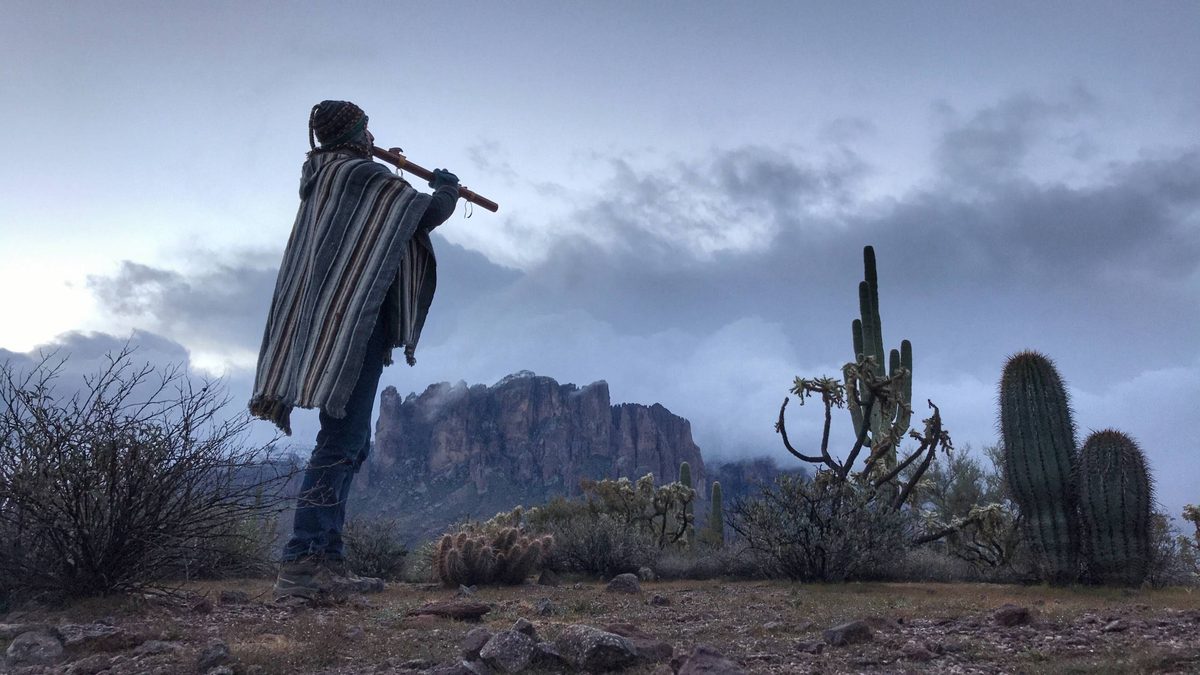
The day begins out on the land, at the mesa, an altar cloth laid on the ground. The first altar is opened there before anyone walks. It faces the East and the fire of the sun. Its prayer is gratitude.
The sacrament is Huachuma, received at the mesa, in the open air. It comes on slowly, and the morning goes on opening.
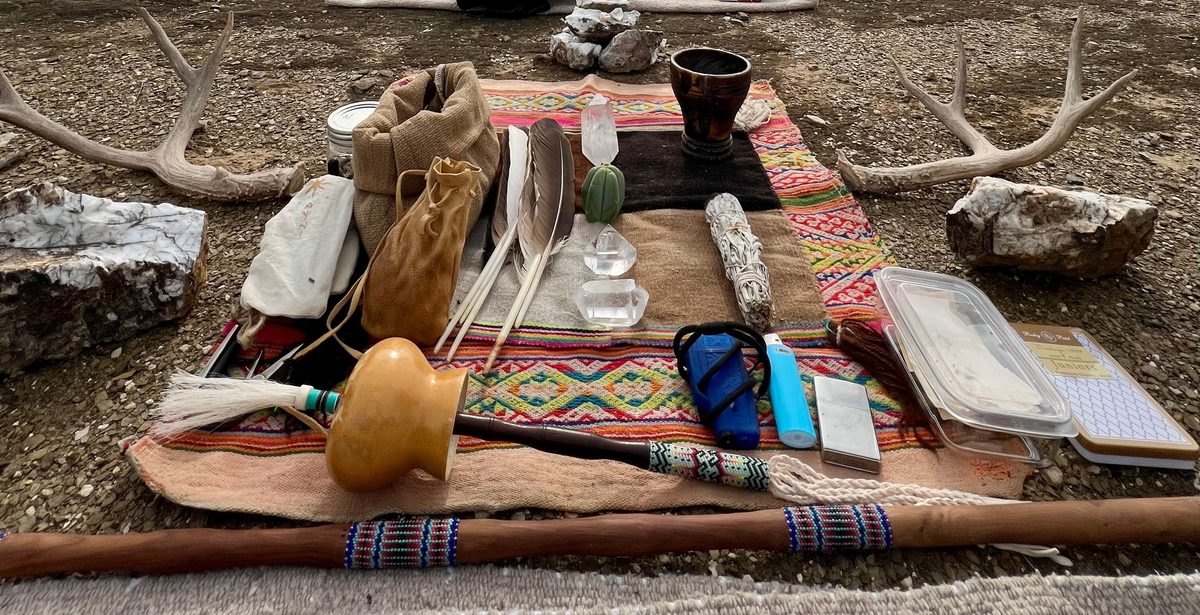
Everything on the cloth has a reason to be there. Huachuma sits at the center. Sage is the first thing lit, and its smoke opens the way for the rest.
Feathers lie on it, each said to carry its own kind of light: the condor's for cleansing; the eagle's for sending a prayer to where it is meant to go; the macaw's for color and playfulness.
A staff lies there for the masculine and a rattle for the feminine, both hung with horse hair. Antlers may lie beside it, for the meeting of heaven and Earth. Crystals carry the prayers. Cedar is there, and tobacco, which is lit because it is counted the oldest of the sacred plants.
People walk around the mesa in one direction only, and the cup is always held in two hands.
Four altars are opened in the course of the day, one to each direction, always in the same order: East first, then West, then North, then South. Each has its element and its prayer, and once one is open the walk goes on inside it until the next.
Fire and the sun, with gratitude for the prayer that opens the day.
Water, with clarity for its prayer.
Air and wind, with unity for its prayer, which here turns outward to all relations.
The Earth, with love for its prayer; the day closes at this altar.
Each prayer is said to bring its shadow with it: anger with gratitude, confusion with clarity, the feeling of being apart with unity, and forgetting with love, and both sides of each are part of the day.
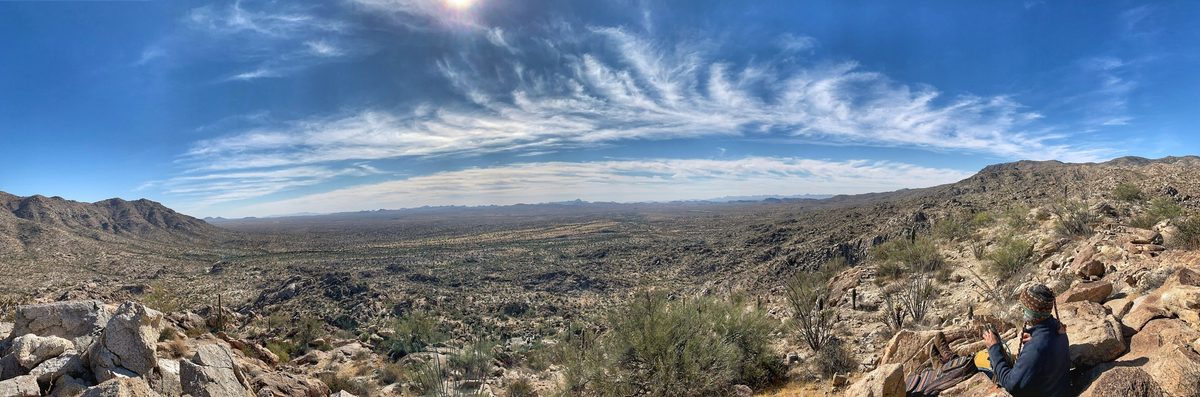
The walking is ordinary walking, spread over a whole day, with stops that run as long as they need to. Much of it leaves the trails, and the way is found as the day goes. The country does most of the work, and in Arizona that can be red rock above Sedona, pine forest near Prescott or saguaro desert around Phoenix. People stay in sight of one another and nobody is hurried.
Most of the walk is made in silence, since the walk itself is the prayer. There are set times for talking and set times for quiet.
Prayers are made at each altar and carried on foot between them. At each altar a rattle goes around the circle with the staff, and whoever is holding them sings. A drum goes along, and a flute, and they get played where it is right to play them.
A full day on foot, in whatever weather that day brings. The temperature can move forty degrees between the start of a day and the middle of the afternoon, and more than that in the high country near Prescott. Water is carried, and a great deal of it.
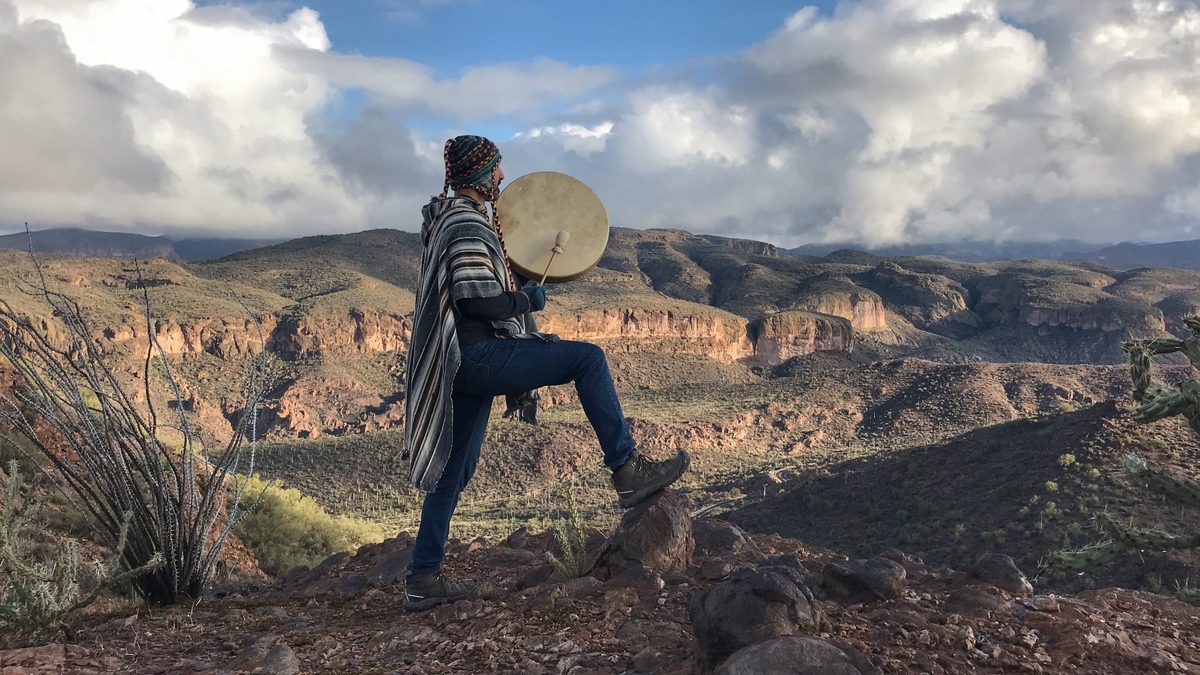
The mountains are the point. In the tradition this comes from, the land itself is the place of prayer, and the plant and the land are the teachers, so the day stays outside, whatever the weather does.
Ayahuasca is a brew made from a vine of the Amazon, and its ceremonies are usually held at night, with everyone seated in one room. Huachuma is a cactus of the Andes, the mountains above that rainforest, and a ceremony with it takes a whole day, outdoors and on foot.
It ends at the fourth altar, the altar of the Earth in the South, with the prayer of love. Then the walk back down.
On some occasions the gathering is a fire instead of a walk, tended through the night until morning.